

“PIVOT YOUR SMALL BUSINESS IN A TIME OF CRISIS”: THE ROLE OF GOVERNMENT SUPPORT AND WELL-BEING ON UK SMEs
With the strategic goal of becoming a multi-disciplinary UEH University with academic reputation and sustainable development in the Asian region, UEH has proactively implemented numerous solutions in recent years to enhance knowledge, train high-quality human resources, integrate and transfer globally, and pioneer innovation to serve the community. Pursuant to this mission, over the past year, an increasing number of renowned scholars have actively collaborated with the University of Economics Ho Chi Minh City (UEH) in international conferences, seminars sharing research results, research methodologies, and the applicability of research topics. Notably, many distinguished academics have signed research fellowship contracts and effectively implemented the contents of these contracts with UEH.
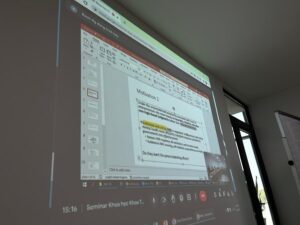
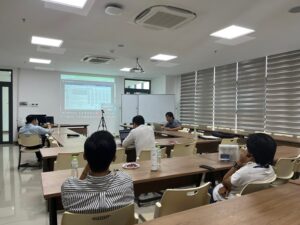
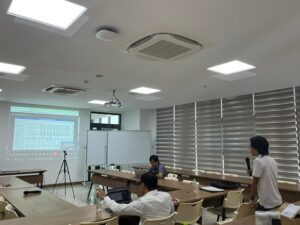
At UEH-CELG, Dr. Nguyen Duy Bach, a researcher from the School of Public Finance, actively participates in seminars sharing research papers, academic exchange activities, and shares research experiences and data sources from the city where he resides – the United Kingdom. Continuing the “Knowledge Enhancement” initiative for scientific exchange, on February 15, 2023, Dr. Nguyen Duy Bach presented his research titled: “Pivot Your Small Business in a Time of Crisis”: The Role of Government Support and Well-being on UK SMEs. The seminar was held in a Hybrid format, accommodating the researcher’s conditions and expanding participation opportunities for graduate students and PhD candidates from UEH-CELG and the School of Public Finance.
This study examines the importance of government financial and information/knowledge support for the adaptability of small businesses in the UK during and after Covid-19. Furthermore, the author investigates how different types of well-being (hedonic and eudaimonic well-being) at various levels (individual level, regional level) affect the relationship between business adaptability and the two forms of government support. Findings drawn from surveys, secondary data, and experimental research indicate that knowledge support is as crucial as financial support in increasing adaptive capacity. Moreover, regional hedonic well-being reinforces the effectiveness of information/knowledge support, while individual eudaimonic well-being enhances the effectiveness of financial support.
The seminar was lively, with many contributions and diverse perspectives from participants regarding the variables, allowing the author to gain a more comprehensive understanding of the variables and the testing model. Assoc. Prof. Dr. Nguyen Hong Thang contributed insights on the basis of the evaluation criteria for Regional Well-being (specifically, whether it was synthesized from existing studies or the author’s arguments). Dr. Nguyen Phuc Canh offered suggestions on the criteria for correlating variables measuring regional well-being, which could potentially influence the testing results.
The seminar concluded successfully, fostering a stronger sense of professional connection and exchange among researchers, faculty members, graduate students, and PhD candidates of UEH-CELG and the School of Public Finance. This, in turn, helps disseminate knowledge and the spirit of scientific academic exchange to students, learners, and doctoral candidates of the School of Public Finance.